Announcement

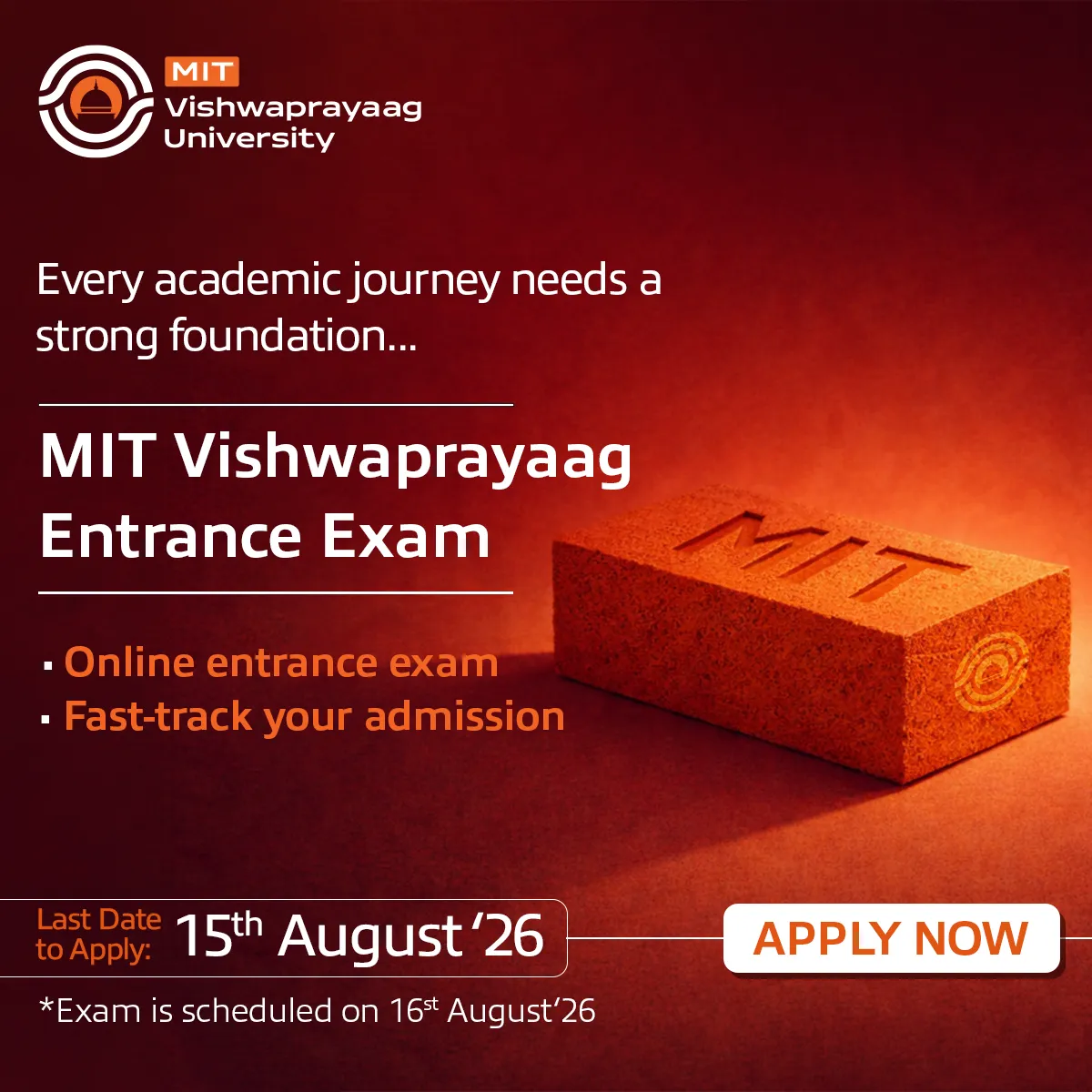
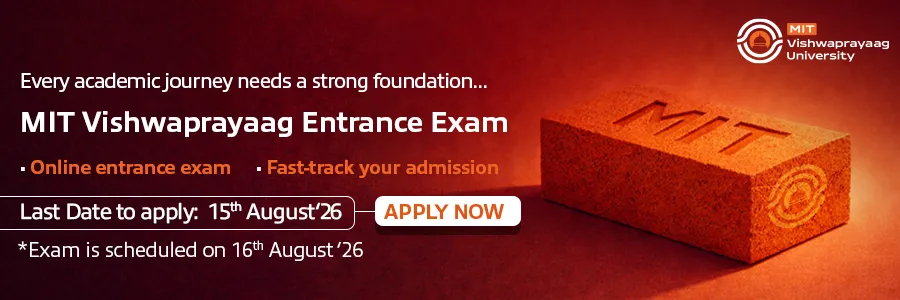
Entrance exam on 31th July 2026 | Last date to apply – 30th July 2026 | Apply now

360° View
B.Tech IT Admissions 2026: Syllabus, Eligibility & Career Scope | MIT Vishwaprayag University
Entrance exam on 14th June 2026  |  Last date to apply – 15th June 2026 Apply now →
School of Computing

B.Tech Information
Technology (IT)

About the Program

The B.Tech in Information Technology at MIT Vishwaprayag University is a premier 4-year engineering program that prepares students to design, deploy, and manage the technology systems that power modern enterprises. Unlike a purely computer-science-focused degree, B.Tech IT uniquely bridges software engineering, network systems, cloud infrastructure, enterprise applications, and IT management — making graduates highly versatile across all industry sectors.

The curriculum emphasizes real-world deployment and system integration, with students working on Mini, Minor, Major, and Capstone Projects that simulate enterprise IT environments. From ERP systems and cloud migrations to IoT deployments and cybersecurity frameworks, students graduate with hands-on experience managing complex, multi-technology ecosystems. A mandatory industry internship ensures every student transitions from campus to career with confidence.

MIT Vishwaprayag University's B.Tech IT graduates are prized by IT consulting firms, technology product companies, banking and financial institutions, healthcare technology companies, and government digital transformation initiatives. The program prepares students for the $500B global IT infrastructure and services market while positioning them for leadership roles in the technology functions of any organization.

Be a Bahumukhi

At MIT Vishwaprayag University, the "Bahumukhi" philosophy shapes every B.Tech IT graduate into a multi-dimensional technology leader who can operate at the junction of people, process, and technology. A Bahumukhi IT engineer is not just an infrastructure specialist — they are a strategic thinker who aligns technology solutions with business outcomes, ensures IT security and compliance, and drives digital innovation in every organization they join.

We envision our IT graduates as capable of designing enterprise cloud architectures, building secure network systems, deploying data-driven business applications, and managing digital transformation at scale — while remaining committed to sustainable technology practices, digital inclusivity, and the ethical responsibilities that come with managing critical information systems. We strive to kindle entrepreneurial ambition in our IT graduates so they can build the next generation of enterprise technology startups and shape the future of India's digital economy.

Program specialisation

Students may choose from three specializations — each comprising a set of professional electives and a specialization project for 18 credits — shaping a distinctive career pathway aligned to the most in-demand areas of enterprise IT and digital infrastructure.

Cloud Computing
Software Development
Information Technology Infrastructure

Program Objectives

  • Build strong foundations in mathematics, programming, network systems, and computer science principles to solve complex information technology challenges.
  • Develop expertise in software development, database systems, cloud infrastructure, IT service management, and enterprise application integration.
  • Integrate emerging technologies including Cloud Computing, IoT, Cybersecurity, AI-driven IT Operations, and Blockchain into hands-on, enterprise-relevant projects.
  • Foster innovation, digital entrepreneurship, and research thinking through Project-Based and Problem-Based Learning methodologies aligned to IT industry practices.
  • Cultivate IT governance, professional ethics, teamwork, and business communication skills essential in every enterprise technology role.
  • Provide industry exposure through structured internships, enterprise technology visits, live IT projects, and collaboration with leading IT services and product companies.
  • Prepare graduates for high-demand careers in cloud engineering, information security, enterprise IT, network engineering, data management, and technology consulting.

Program Highlights

Enterprise network design and cloud deployment labs from Year 2 onwards

Dedicated IT Security, Ethical Hacking, and Governance modules

Industry-aligned curriculum reviewed annually by Board of Studies (BoS)

Mini, Minor, Major & Capstone Projects simulating real enterprise IT environments

Mandatory internship with structured IT career readiness preparation

160 credits integrating software, networks, cloud, and enterprise IT domains

Expert faculty mentorship with regular industry guest lectures and certifications

Specializations aligned to the $500B global IT infrastructure and services sector

Course Curriculum

Semester 01

Engineering Mathematics I
Problem Solving using C Programming
C Programming Lab
Computer Organization & Digital Logic
Digital Logic Lab
Design Thinking for Sustainability
Health & Well-Being

Semester 02

Engineering Mathematics II
Data Structures using Python
Data Structures Lab
Web Technologies Fundamentals
Web Technologies Lab
Applied Mathematics for IT
AI for All

Semester 03

Database Management Systems
DBMS Lab
Object-Oriented Programming using Java
Java Lab
Operating Systems
Probability & Statistics for IT
Technical Communication

Semester 04

Computer Networks
Computer Networks Lab
Software Engineering
Introduction to Cloud Computing
Cloud Lab (AWS/Azure Fundamentals)
IT Service Management (ITIL Basics)
Mini Project

Semester 05

Network Security & Cryptography
Advanced Cloud Architecture
Advanced Cloud Lab
Data Analytics & Business Intelligence
Discipline Specific Elective – DSE 1
Open Elective I
Minor Project

Semester 06

DevOps & Containerization (Docker/Kubernetes)
DevOps Lab
Internet of Things (IoT)
IoT Lab
Discipline Specific Elective – DSE 2
Open Elective II
Major Project

Semester 07

Enterprise Systems Integration & ERP
IT Risk Management & Governance
Discipline Specific Elective – DSE 3
Discipline Specific Elective – DSE 4
Open Elective III
Capstone Project I
University Core V & VI

Semester 08

Capstone Project II
Internship
Open Elective IV
University Core VII
University Core VIII

Eligibility

Academic Criteria

  • Passed 10+2 (HSC) with Physics, Chemistry & Mathematics as compulsory subjects
  • Minimum 50% aggregate marks (45% for reserved categories)
  • Students from Science stream with PCM background preferred

Entrance Exams

  • JEE Main (National Level)
  • MHT-CET (Maharashtra State)
  • PERA-CET or equivalent approved exam

Admission Process

  • Apply online at application.mitvpu.ac.in
  • Submit entrance exam scorecard and academic documents
  • Pay application fee of ₹1,000 online

Documents Required

  • Class 10 & 12 Marksheets and Passing Certificate
  • Valid Entrance Exam Scorecard
  • School Leaving / Transfer Certificate
  • Aadhaar Card and Caste Certificate (if applicable)

Program Outcomes (POs & PSOs)

PO1
Engineering knowledge
Apply the knowledge of mathematics, science, engineering fundamentals, and an engineering specialization to the solution of complex engineering problems.  
PO2
Problem analysis
Identify, formulate, review research literature, and analyze complex engineering problems reaching substantiated conclusions using first principles of mathematics, natural sciences, and engineering sciences.
PO3
Design/Development of Solutions
Design solutions for complex engineering problems and design system components or processes that meet the specified needs with appropriate consideration for the public health and safety, and the cultural, societal, and environmental considerations.
PO4
Conduct investigations of complex problems
Use research-based knowledge and research methods including design of experiments, analysis and interpretation of data, and synthesis of the information to provide valid conclusions.
PO5
Modern tool usage
Create, select, and apply appropriate techniques, resources, and modern engineering and IT tools including prediction and modelling to complex engineering activities with an understanding of the limitations.
PO6
The engineer and society
Apply reasoning informed by the contextual knowledge to assess societal, health, safety, legal and cultural issues and the consequent responsibilities relevant to the professional engineering practice.
PO7
Environment & Sustainability
Understand the impact of the professional engineering solutions in societal and environmental contexts, and demonstrate the knowledge of, and need for sustainable development.
PO8
Ethics
Apply ethical principles and commit to professional ethics and responsibilities and norms of the engineering practice.
PO9
Individual & Teamwork
Function effectively as an individual, and as a member or leader in diverse teams, and in multidisciplinary settings.
PO10
Communication
Communicate effectively on complex engineering activities with the engineering community and with society at large, such as, being able to comprehend and write effective reports and design documentation, make effective presentations, and give and receive clear instructions.
PO11
Project Management & Finance
Demonstrate knowledge and understanding of the engineering and management principles and apply these to one’s own work, as a member and leader in a team, to manage projects and in multidisciplinary environments.
PO12
Life-long Learning
Recognize the need for and have the preparation and ability to engage in independent and lifelong learning in the broadest context of technological change.
PSO1
Electronics System Design
Apply electronic system design and programming expertise to solve complex problems related to manufacturing and service operations in ESDM sector.
PSO2
Intelligent System Design
Design intelligent systems by responsibly integrating AI and data analytics with appropriate sensing, control, and actuation strategies.

Career Opportunities

B.Tech IT graduates from MIT Vishwaprayag University are equipped for high-impact careers across India's IT services sector, global cloud providers, financial technology firms, healthcare IT companies, and government digital transformation projects.

Cloud Engineer / Cloud Architect

Information Security Analyst

Network Engineer / Systems Administrator

DevOps / Site Reliability Engineer

Database Administrator / Data Engineer

IT Project Manager / Scrum Master

IoT Solutions Developer

IT Consultant / Business Technology Analyst

Ethical Hacker / Penetration Tester

ERP Consultant / Systems Integrator

IT Risk & Compliance Analyst

Technology Entrepreneur / IT Startup Founder

Fees Structure

The fee structure for the B.Tech Information Technology program at MIT Vishwaprayag University is approved by the Fee Fixation Committee as per Maharashtra government norms. Tuition fees are structured on a per-year basis and include development charges and laboratory fees. The exact fee amount may vary each academic year based on official government notification.

Students are encouraged to contact the Admissions Office directly for the most current and confirmed fee details. MIT-Vishwaprayag offers merit-based scholarships — including the Vishwaprayag Merit Scholarship with up to 100% fee waiver for top-ranking entrance exam scorers. Financial assistance and easy payment options are available for eligible candidates.

For detailed fee information and scholarship eligibility criteria, please visit the official admissions portal at www.mitvpu.ac.in/admissions or contact our admissions helpdesk.

Events & Student Life

Student Testimonials

The B.Tech IT program's emphasis on cloud and DevOps gave me skills that are immediately valuable in the market. Our Year 3 cloud architecture project was almost identical to the infrastructure design challenge I was given during my placement interviews at AWS.

V
Vivek Bhosale

B.Tech IT 2024 Batch · Cloud Associate at Amazon Web Services

The Information Security specialization was rigorous and incredibly relevant. The ethical hacking labs and the CTF competitions prepared me better than any certification course could. My Capstone Project on zero-trust architecture landed me my dream role.

M
Meera Joshi

B.Tech IT 2024 Batch · Security Analyst at Deloitte

What sets MIT-Vishwaprayag's IT program apart is the enterprise focus. We didn't just learn theory — we deployed real cloud environments, configured network systems, and built IoT prototypes. I was contributing to my team's projects from Week 1 of my internship.

K
Kiran Patil

B.Tech IT 2025 Batch · Intern at Microsoft Azure

The IoT specialization at MIT-Vishwaprayag is outstanding. From smart sensor systems to edge computing deployments, the practical exposure was unmatched. I co-founded a smart-agriculture IoT startup in my final semester — something the program's entrepreneurship support made possible.

P
Pranav Kulkarni

B.Tech IT 2024 Batch · Co-Founder, AgriTech Startup

Frequently Asked Questions

What is the duration and credit requirement of the B.Tech IT program?
The B.Tech in Information Technology is a 4-year (8 semester) full-time program with a minimum credit requirement of 160 credits. The maximum duration allowed is 8 years (twice the normal duration).
What is the difference between B.Tech IT and B.Tech CSE?
B.Tech CSE focuses on the science and engineering of computing — covering algorithms, AI/ML, system programming, and computer architecture. B.Tech IT focuses on the application and management of information technology in enterprises — emphasizing cloud infrastructure, network systems, cybersecurity, enterprise applications, IoT, and IT governance. CSE graduates typically enter software engineering and AI roles; IT graduates excel in cloud, networking, IT security, consulting, and enterprise systems roles.
What specializations are offered in B.Tech IT?
Students can choose from three specializations: (1) Cloud Computing & DevOps — covering AWS, Azure, Docker, Kubernetes, and Terraform; (2) Information Security & Governance — covering Ethical Hacking, Network Security, IT Risk Management, and ISO 27001; and (3) Enterprise Systems & IoT — covering ERP, SAP, IoT, API Management, and Edge Computing. Each specialization is 18 credits.
Are there scholarships available for B.Tech IT students?
Yes. MIT-Vishwaprayag offers Vishwaprayag Merit Scholarships — Type I (100% fee waiver for top 3%), Type II (50% waiver for top 8%), and Type III (25% waiver for top 12%) — based on entrance exam percentile scores. MHT-CET/JEE scores above the 75th percentile are eligible. Continuation requires maintaining strong academic performance.
What teaching methodology is used in the B.Tech IT program?
The curriculum uses Project-Based Learning (PBL) and Problem-Based Learning, with Flipped Classroom, Simulation, Activity-based Learning, and Enterprise Field Visits. Assessment follows a 50:50 CIA:ESA pattern for theory and 80:20 for practicals, projects, and internships. Students benefit from dedicated cloud labs and networking simulation environments.
What are the placement opportunities for B.Tech IT graduates?
B.Tech IT graduates are placed in companies across cloud computing, IT security, enterprise systems, network engineering, and IT consulting — including firms like AWS, Microsoft, Deloitte, Accenture, TCS, Infosys, Wipro, HCL, IBM, and Cognizant. The university's dedicated placement cell and industry partnerships ensure strong employment outcomes across IT service and product sectors.
Is there an internship component in the B.Tech IT program?
Yes. A mandatory internship (3 credits) is included in Semester 8. Additionally, students undertake Mini Projects (Sem 4), Minor Projects (Sem 5), Major Projects (Sem 6), and Capstone Projects I & II (Sem 7 & 8), providing comprehensive real-world IT project experience across all four years of the program.
Is B.Tech IT a good career choice in 2026?
Yes — cloud computing, DevOps, and information security are among India's fastest-growing IT roles in 2026. Cloud architects and security analysts command ₹6–22 LPA starting salaries. India's $250B IT sector and global digital transformation continue to drive strong demand for B.Tech IT graduates.
What are the B.Tech IT fees at MIT Vishwaprayag University?
Total B.Tech IT fees at MIT VPU range from ₹7,05,000 to ₹8,05,000 for the full 4-year program. Merit scholarships offer up to 100% Year 1 tuition waiver for students with MHT-CET/JEE Main scores above the 75th percentile. Contact admissions@mitvpu.ac.in for detailed fee structure.